


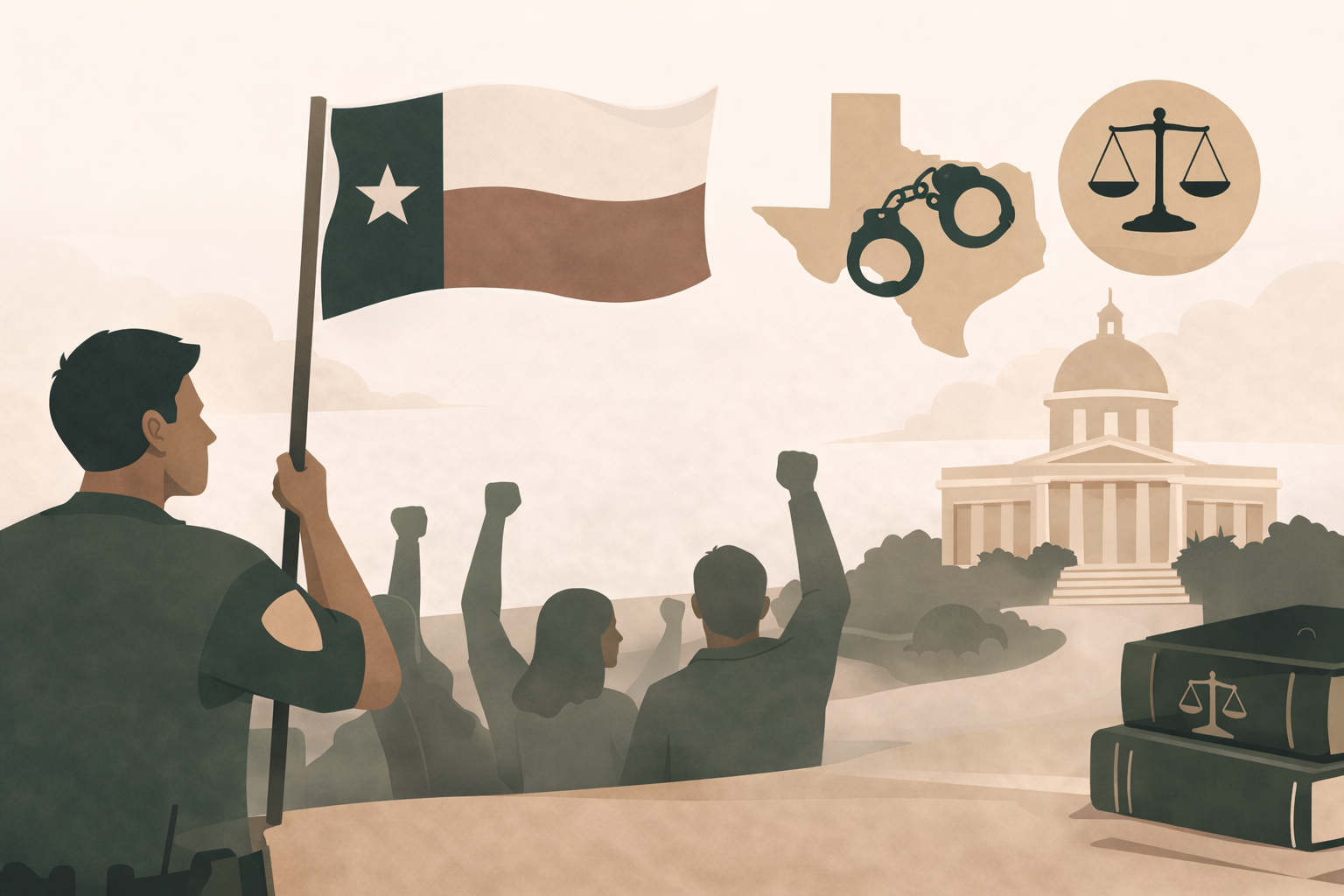

Insurrection charges relate to actions that are intended to either resist or overthrow the government’s authority, which is taken especially seriously at both the state and the federal level. Insurrection is not only considered a crime against the United States but also against the Constitution.
If you have been charged with insurrection, you are in a very difficult position, and bringing your strongest defense is paramount. Reach out for professional legal counsel by contacting an experienced Killeen criminal defense attorney today.
Insurrection Charges
As mentioned, insurrection applies to actions that are deemed an attempt to overthrow or resist the government’s authority, and charges can relate to protests, riots, and organized efforts to disrupt law and order. Insurrection charges can also relate to perfectly legal protests that evolve into illegal riotous actions.
Because insurrection affects the very fabric of society, related laws are especially harsh, and the charge begins as a felony in Texas. Proving insurrection, however, involves more than simply demonstrating specific actions. The intention behind these actions must also be established in order to prove that the accused participated in insurrection.
Insurrection Laws in Texas
Insurrection charges relate to uprisings or rebellious actions against the state government. This can include any attempt to overthrow the state or federal government through violence, force, or any other illegal means.
Both state and federal laws are intended to support the integrity of governmental entities and to ensure that citizens do not take the law into their own hands as a means of challenging the state’s authority.
Treason Against the State
In Texas, insurrection is classified as a treasonous act, which means the associated penalties are especially harsh. Treason against the state in Texas refers to levying war against the state, attempting to overthrow the state, or affording the state’s enemies comfort and aid.
Involvement in Insurrection
In Texas, you are not required to engage in an act of violent rebelliousness in order to face an insurrection charge. Instead, any act of conspiracy with others engaging in insurrection will suffice. For example, encouraging or assisting those who commit insurrection can lead to an insurrection charge even if you did not participate in the rebellious act itself.
Federal Insurrection Laws
Texas insurrection laws basically mirror federal insurrection laws, which make it a crime to incite, participate in, or assist with an insurrection against federal laws and authority. While we have the constitutional right to engage in peaceful demonstrations, this does not extend to violence or destruction.
For example, if government property is destroyed or if federal officers are assaulted during a demonstration, the charge of insurrection can apply.
Insurrection at the federal level applies to acts of violence against the federal government, but it is important to know that other charges can also apply. For example, the charge of seditious conspiracy refers to efforts that are designed to overthrow the U.S. government, even if the planned violence is never carried out.
If you are facing insurrection charges of any kind, contact a skilled criminal defense attorney right away to start building your strongest possible defense.
Evidence and Insurrection Charges
When it comes to criminal charges, including insurrection, evidence can come in many different forms.
Physical Evidence
In criminal cases, physical evidence is a primary form of evidence that tends to be very straightforward and often translates to stronger cases. When there is tangible evidence that connects the alleged illegal act and the person who has been charged, it can help prove guilt beyond a reasonable doubt.
For example, in insurrection cases, having explosives or a dangerous weapon on one’s person at the time of arrest is a form of physical evidence that can speak to intent – namely that the accused intended to cause harm or damage.
Physical evidence in insurrection cases, however, does not begin and end with weapons. In fact, weapons may not play a role at all. Other prime examples of physical evidence include maps or instructions written in the accused person’s hand, showing that the accused was involved in planning, organizing, or supporting the insurrection.
Testimonial Evidence
While physical evidence can play a critical role in insurrection cases, testimonial evidence can also be key. When a witness who saw the event unfold testifies regarding what they saw, it can go a long way toward building an insurrection case.
When a witness can credibly demonstrate that they saw the defendant’s direct involvement in the insurrection or in the insurrection’s planning, it can prove very important to the case.
Sometimes, the testimony of attending police officers – along with the testimony of other eyewitnesses – can highlight exactly how the rebellious incident transpired, the timeline involved, and the defendant’s participation in the matter.
Forensic Evidence
Forensic evidence refers to evidence that is unearthed through the application of science. For example, forensic expertise can lead to strong physical evidence, such as fingerprints and DNA at the scene of the crime.
Forensic evidence can help establish who was present when the insurrection took place and can potentially determine the level of participation of specific individuals engaged in.
Forensic evidence can help the prosecution draw a direct line between the insurrection and the accused, which can strengthen their case considerably.
Social Media and Other Forms of Digital Evidence
Digital evidence, including social media posts, is becoming increasingly relevant in criminal cases. People often turn to social media to share their triumphs, defeats, plans, opinions, actions, and more. Sometimes, these posts tell a story showing intent and participation in insurrections that is difficult to refute.
Digital evidence is not limited to the posts, videos, photos, and other information that you share on social media platforms yourself. Instead, every post you react to and every post that references you can come into play.
Further, it is important to point out that there is virtually no privacy when it comes to social media, regardless of how rigorous you are with your privacy settings. Ultimately, a simple screengrab captured by virtually anyone could come back to haunt your case.
Electronic correspondence and posts can also tell a compelling story and can lead the state to additional sources of evidence against you. Never underestimate the power of digital evidence, which can show intent and can pinpoint the planning stages of an alleged insurrection.
Circumstantial Evidence
Direct evidence is not always available in criminal cases, but substantial circumstantial evidence can fill the void. Additionally, circumstantial evidence can bolster any physical evidence that the state does have.
Circumstantial evidence suggests a fact but does not directly prove it. For example, if the accused has known ties to others who were associated with the insurrection or was seen near the insurrection, it can strengthen the charge against them. The accused’s actions before and after the event can also serve as compelling circumstantial evidence.
The Matter of Intent
A primary element of insurrection charges is establishing the defendant’s intent. The charge of insurrection requires purpose and action on the part of the accused, which means they must have intended to disrupt the government in some way. Intent is critical in insurrection cases, and proving intent can be very challenging.
It is very difficult to definitively assign intention to someone else’s actions, which means that insurrection cases tend to be as challenging as they are legally complex. The state will likely attempt to prove intent using the following kinds of evidence:
Statements made by the accused
Actions taken by the accused
Any indication that the accused engaged in planning or recruitment in relation to the insurrection
The defendant’s knowing participation in the insurrection and their intent are key concerns when it comes to insurrection cases.
As part of a strong defense strategy, a seasoned criminal defense attorney will often try to dismantle the opposition’s case for criminal intent.
The Right to Protest
It is important to distinguish between the right to protest and the illegality of insurrection. In fact, the right to free speech is so strong in the United States that insurrection charges are relatively rare.
Both the U.S. Constitution and the Texas Constitution uphold our longstanding right to protest. This extends to the right to arrange and attend peaceful marches on most public land and the right to free speech, which includes symbolic speech, such as wearing armbands that send a specific message.
These Rights Are Not Without Certain Conditions
American citizens hold the following basic rights, regardless of how controversial or unpopular the underlying views may be:
The right to march
The right to parade
The right to picket
The right to leaflet
The right to circulate petitions
The right to collect signatures
This list of peaceful forms of protest could go on, and while these rights are strong, certain regulations may apply regarding how they are executed.
The government at both the state and federal levels has a serious interest in maintaining peace and public order, and, in response, has the authority to implement certain restrictions on specific protest activities.
When Restrictions Apply
Generally, the government does not have the authority to restrict or regulate speech when the restriction is based on content. Any restrictions regarding our right to free speech must be based on something other than the view and ideas expressed.
The government can, however, implement restrictions that are considered narrowly tailored to serving the greater good, which amounts to the government having a compelling interest, when doing so is the least restrictive means of accomplishing this goal.
Categories of Speech
The government has the right to restrict some categories of speech that are deemed outside the parameters of First Amendment protections. These include obscenities and language that is defamatory, false, and intended to harm the subject’s reputation. Further, words that are designed to incite a riot or any other imminent lawless action are restricted.
For example, yelling “fire!” in a crowded theater, when there is no fire and when it leads to dangerous consequences, can lead to criminal charges.
Time, Place, and Manner Restrictions
The government also has the authority to implement restrictions that relate to the time, place, and manner of the free speech in question. This form of restriction is generally intended to preserve public order. A good example is prohibiting a parade from conflicting with heavy traffic.
Where Protests Are Allowed
Protests are allowed in public spaces, but not all public spaces are created equally. For example, you can generally protest on public streets, sidewalks, and parks, as well as on the internet, which are considered places of assembly and debate.
Further, you can generally protest on public property that fronts government buildings as long as access is not blocked and the protest does not interfere with the building’s purpose.
Other public properties are classified as moderately protected or as not qualifying as public forums. Moderate protections apply in spaces that are open for the specific purpose of speech, such as certain locations in public universities or meetinghouses. Depending on the circumstances, your right to protest may or may not be protected in these spaces.
All other government property is considered non-public, including government offices and military bases. While these are technically public premises, they are not the right forum for public protests, and the government can implement restrictions related to speech as long as the restrictions are not based on viewpoint and are not unreasonable in nature.
You Need an Experienced Killeen Criminal Defense Lawyer on Your Side
Brett Pritchard at the Law Office of Brett H. Pritchard is a capable Killeen criminal defense attorney who is committed to faithfully defending your rights to free speech and to assemble. He will fiercely advocate for your legal rights and zealously defend you in the face of a criminal charge.
Learn more about what we can do to help by contacting us online or calling us at (254) 781-4222 and scheduling a FREE consultation today.