


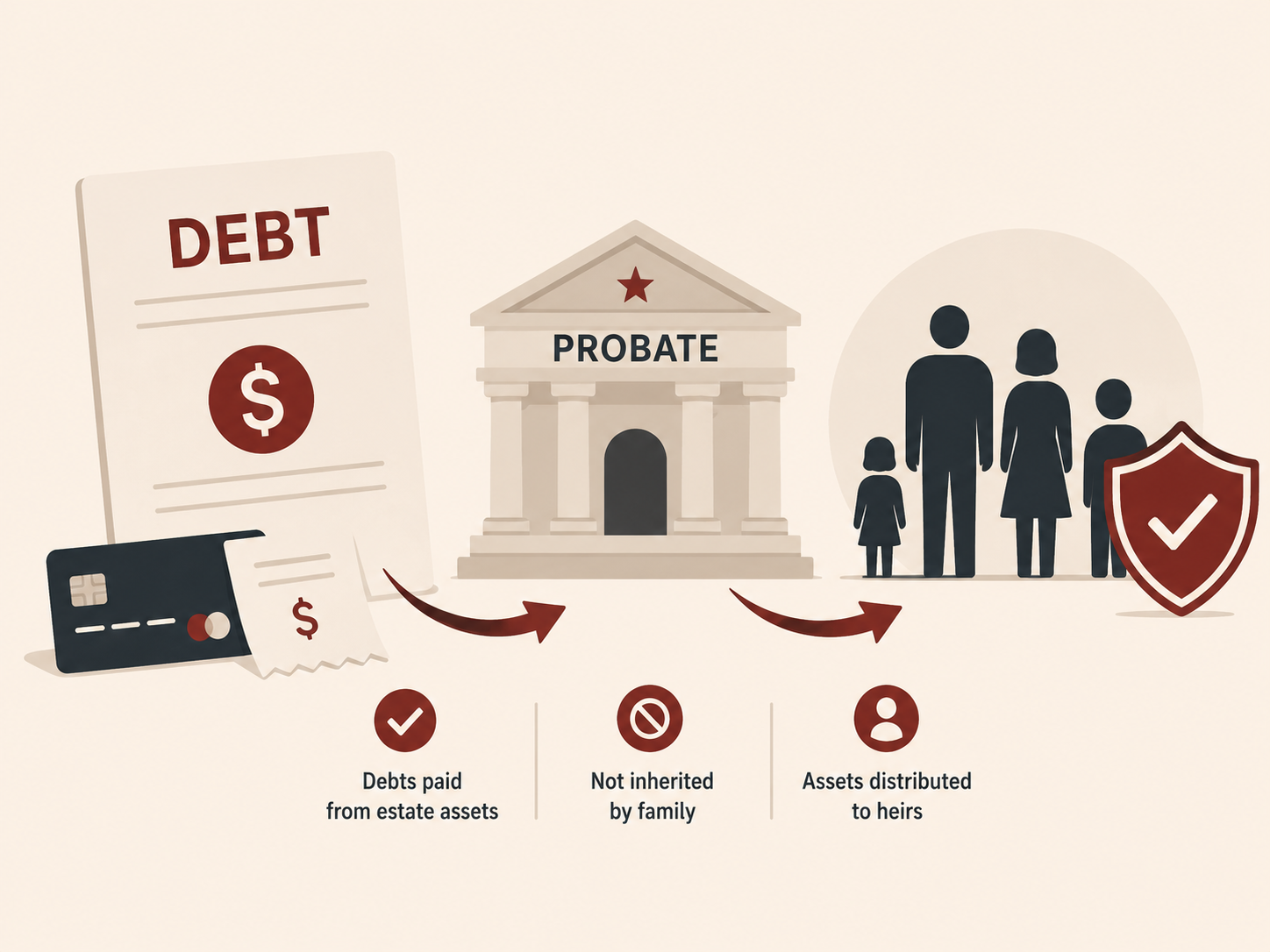

One of the most common fears families face after losing a loved one is inheriting their debt. In most cases, that fear is unfounded, but understanding how debt is actually handled during probate is important for anyone serving as an executor or expecting to receive an inheritance.
The bottom line: Beneficiaries are generally not personally responsible for a deceased loved one's debts. The estate pays what it owes, creditors have a limited window to file claims, and only after debts are settled do remaining assets pass to heirs. A Killeen probate attorney can guide executors through every step of this process.
Key Takeaways
Beneficiaries are not personally responsible for a deceased person's debts in most circumstances.
The estate itself is responsible for paying valid debts before assets are distributed to heirs.
Exceptions exist for co-signers, joint account holders, and surviving spouses under Texas community property rules.
Personal representatives must notify known creditors within two months and publish notice for unknown creditors within 30 days of appointment.
Creditors generally have four months from notice to file a claim against the estate.
If the estate is insolvent, creditors are paid in a specific order of priority.
Personal representatives can face personal liability if they mishandle creditor claims.
A Killeen probate attorney can protect personal representatives from that risk.
Do Debts Survive Death in Texas?
Yes, but in a limited way. Debts survive a person's death in Texas, but the estate, not the heirs, is responsible for paying them.
The estate must address the following types of debt:
Secured debts: These are debts such as mortgages and car loans that are backed by collateral. These must either be repaid or the creditor can repossess the collateral.
Unsecured debts: These are debts not backed by collateral, such as credit card balances and personal loans. These do not have priority when estate assets are limited.
Taxes: The estate must file a final tax return and pay any outstanding federal and state taxes owed by the deceased.
Are Family Members Responsible for the Deceased's Debts?
In most cases, no. Beneficiaries and heirs are not directly responsible for a deceased loved one's debts. They are indirectly affected because valid debts are paid from estate assets before any inheritance is distributed, meaning heirs may simply receive less.
There are three exceptions to this general rule:
Co-signed loans: If a family member co-signed a loan with the deceased, that individual is personally responsible for the debt, not the estate as a whole.
Joint credit accounts: The surviving co-account holder becomes responsible for that debt.
Community property debts: A surviving spouse may be responsible for debts incurred during the marriage under Texas community property rules.
Understanding Community Property and Debt in Texas
Texas treats most assets and debts acquired during a marriage as jointly owned. Debts incurred during the marriage are generally considered community debts, meaning both spouses share responsibility, even if only one spouse's name appears on the account. After a spouse dies, creditors may have a legitimate claim against community property to satisfy those debts.
However, debts one spouse brought into the marriage or incurred solely in their own name for non-community purposes are typically treated as separate debts. The surviving spouse is generally not personally liable for those obligations from their own separate property.
How Creditors Are Notified During Probate
Because probate is often the last opportunity creditors have to collect what they are owed, they must receive proper notice of the proceedings.
The personal representative's notification obligations:
Directly notify all known creditors within two months of receiving their Letter Testamentary from the court
Publish a notice in a local newspaper within 30 days of being appointed by the court, so unknown creditors can participate
Creditor deadlines for filing claims:
Creditors who were directly notified have four months from the date of that notice to file a claim.
Creditors who learned of probate through the published advertisement have four months from the date of publication to respond.
This step adds considerable time to the probate process because assets cannot be distributed to beneficiaries until all creditors have had the opportunity to respond.
How Personal Representatives Handle Creditor Claims
Once claims are submitted, the personal representative reviews each one and determines whether to accept or deny it.
Grounds for Denying a Claim
The personal representative may deny a creditor's claim for any of the following reasons:
The creditor has not provided adequate documentation.
The statute of limitations on the debt has passed.
The creditor missed the filing deadline.
The claimed amount has been inflated.
The debt was not actually incurred by the deceased.
What Happens After a Denial
If the personal representative denies a claim, the creditor has the right to file a lawsuit against the estate. That lawsuit must be filed within 90 days of receiving notice of the denial. A judge will then determine whether the debt is valid and whether the estate must pay it. Disputed claims can significantly lengthen the probate timeline because assets cannot be distributed while outstanding claims remain unresolved.
Paying Valid Claims
When a claim is accepted, payment comes from estate assets. The personal representative may use liquid cash first. If cash is insufficient, estate property may be sold to raise funds.
In a dependent administration, the court must approve both the sale of estate property and the payment of creditor claims.
In an independent administration (the preferred outcome under Texas law), the personal representative does not need court approval for these transactions, which speeds up the process considerably.
What Happens If the Estate Is Insolvent?
An insolvent estate has more debts than assets. Beneficiaries do not become personally liable for the shortfall. However, the personal representative must stop distributions to beneficiaries and focus on paying creditors in the correct legal order.
Texas law requires creditors to be paid in the following priority:
Funeral and burial expenses
Estate administration costs, including attorney fees, executor fees, and court costs
Secured debts backed by collateral, such as mortgages and car loans
Taxes
Unsecured debts, such as credit cards and personal loans
If there is not enough money to pay an entire class of creditors in full, each creditor in that class receives a proportional share of what is available.
Important Notes on Insolvent Estates
The personal representative may need to liquidate estate property to satisfy debts.
Life insurance policies and beneficiary-designated accounts generally pass outside of probate and are not affected by estate debts, unless the estate itself is named as the beneficiary.
Secured creditors retain the right to seize collateral, such as foreclosing on a home or repossessing a vehicle.
Creditors may be able to reach community property interests depending on when the funds in an account were earned.
The Personal Representative's Fiduciary Duties and Personal Risk
Personal representatives owe fiduciary duties to the beneficiaries of the estate. Because they have superior knowledge of the estate's affairs and beneficiaries rely on them, they must act with care and diligence.
Mishandling creditor claims can have serious personal consequences. If a personal representative overpays a creditor, pays the wrong claimant first, or otherwise acts negligently, they could be held personally liable to the beneficiaries for the resulting harm. Getting the order of payments right is not just a procedural obligation. It is a matter of personal financial exposure.
How a Killeen Probate Attorney Can Help
A Texas probate attorney can protect personal representatives from liability and help ensure the process runs smoothly. An attorney can assist in all of the following ways:
Locating and notifying creditors of the probate proceeding
Reviewing submitted claims to determine their validity
Helping ensure the estate pays only what it legally owes
Negotiating with creditors over disputed amounts or validity
Representing the personal representative if a creditor files a lawsuit
Defending the personal representative against misconduct claims from beneficiaries
When an estate is complex or carries significant debt, the risks of going it alone are too high. Working with a seasoned probate attorney brings clarity to the process and gives families peace of mind that the personal representative is receiving sound, timely legal guidance.
Questions About Probate in Killeen, TX? We Can Help.
Navigating probate while grieving is difficult. The Law Office of Brett H. Pritchard is here to guide executors and families through every step of the process, from filing the initial petition to the final distribution of assets, with the clarity and compassion you deserve.
Call (254) 781-4222 or contact us online to schedule a FREE consultation with a Killeen probate attorney today.
Frequently Asked Questions
Are family members responsible for a deceased person's debt in Texas?
Generally, no. Beneficiaries and heirs are not personally responsible for a deceased loved one's debts. The estate pays valid debts before assets are distributed to heirs. Exceptions apply to co-signers, joint account holders, and surviving spouses under Texas community property rules.
What types of debt must a Texas estate pay during probate?
The estate must pay secured debts such as mortgages and car loans, unsecured debts such as credit cards and personal loans, and any outstanding federal and state taxes owed by the deceased.
How long do creditors have to file a claim against an estate in Texas?
Creditors who are directly notified by the personal representative have four months from the date of that notice to file a claim. Creditors who learn of probate through a published advertisement have four months from the date of publication.
What happens if a Texas estate does not have enough money to pay all its debts?
If the estate is insolvent, assets are used to pay creditors in a specific legal order: funeral expenses first, then estate administration costs, then secured debts, then taxes, then unsecured debts. Beneficiaries do not become personally responsible for any remaining shortfall.
Can a personal representative be held personally liable for mishandling creditor claims?
Yes. Personal representatives owe fiduciary duties to beneficiaries and must handle creditor claims with care and diligence. Overpaying a creditor, paying in the wrong order, or acting negligently can expose the personal representative to personal financial liability.
How can a probate attorney help with creditor claims in Texas?
A probate attorney can help locate and notify creditors, review the validity of submitted claims, negotiate disputes, represent the personal representative in litigation, and defend against misconduct claims from beneficiaries. Their guidance significantly reduces the personal representative's risk throughout the process.
How do I get help with probate and creditor claims in Killeen, TX?
Contact the Law Office of Brett H. Pritchard to speak with an experienced Killeen probate attorney. Call (254) 781-4222 or contact us online to schedule a FREE consultation today.