


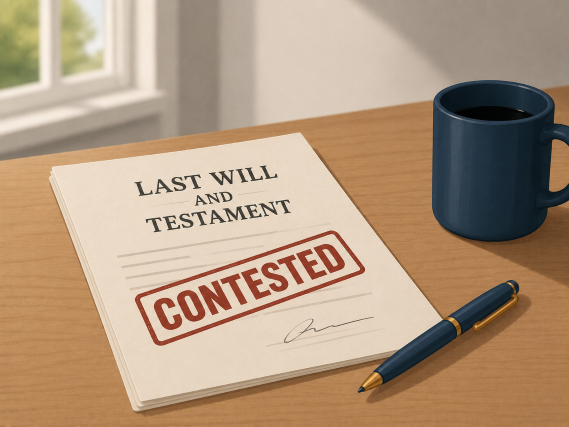

Quick Answer: A will can be contested in Williamson County by an "interested person" who has standing under Texas law, based on specific legal grounds such as lack of mental capacity, undue influence, improper execution, fraud or forgery, or revocation by a later will.
Under Texas Estates Code Section 256.204, most contests must be filed within two years of the date the will is admitted to probate, with limited exceptions for forgery or fraud.
Families in Round Rock and throughout Williamson County often expect a will to bring clarity, not conflict, after a loved one dies. When questions arise about fairness or validity, contesting a will in Williamson County becomes a serious option rather than an emotional reaction.
A Round Rock estate planning lawyer at The Law Office of Brett H. Pritchard can walk you through what a will contest involves and help you understand your next steps.
You deserve clear explanations rather than technical jargon. You likely have questions regarding who may challenge a will, the legal reasons a court will recognize, and the basic procedures that follow in probate. A probate attorney is ready to answer your questions, allowing you to weigh risk, cost, and family impact in an informed way.
Key Takeaways
A will contest asks the probate court to decide whether a document meets Texas legal requirements, either before or after the will is admitted to probate.
Only an "interested person," meaning someone whose financial interest changes depending on the will's validity, has standing to contest.
Recognized legal grounds include lack of mental capacity, undue influence, improper execution, fraud or forgery, and revocation.
Most contests must be filed within two years of the date the will is admitted to probate under Texas Estates Code Section 256.204.
Strong evidence often includes medical records, prior estate planning documents, financial and communication records, and witness testimony.
Many disputes resolve through family settlement agreements rather than a full trial.
Some wills include "no contest" clauses, though Texas law limits their enforcement in certain good-faith situations.
Will Contests in Round Rock and Surrounding Areas
Will contests focus on validity. The party or parties contesting the will are asking the probate court to decide whether a document that claims to be the final will actually meets Texas legal requirements. The dispute may begin before the court admits the will to probate or after the judge signs an order recognizing the will as valid. Families thinking about contesting a will sometimes confuse disagreement with true legal grounds, so careful review of the facts becomes important.
Probate in Texas follows statewide rules even though each county court manages its own docket. Under Texas Estates Code Section 256.204, an interested person usually has two years from the date a will is admitted to probate to file a contest, with limited exceptions for forgery or fraud.
An experienced Round Rock estate planning lawyer will explain how that two-year period works in practice and how earlier objections during the initial probate application may change the timeline.
Legal grounds also limit who can succeed in a contest. A court will not set aside a will simply because someone feels the distribution is unfair or unequal. Evidence must point to a defect in capacity, improper pressure, fraud, or problems with signing and witnesses.
Families who understand that difference can focus their time and effort on issues that truly matter in court rather than old personal grievances.
Who Has Standing to Challenge a Will?
Standing describes who has the legal right to file a contest. Texas law allows an "interested person" to challenge a will, a category that includes people whose financial interests change depending on whether the will is valid.
An estate planning attorney will usually begin by analyzing how the estate would pass if the current will is set aside and whether your position would improve under an earlier will or under intestacy rules.
Heirs who would inherit if there were no will often qualify to challenge a document that cuts them out entirely or sharply reduces their share. Beneficiaries named in a prior will may also object if the new document dramatically changes gifts.
Our seasoned estate planning lawyers in Round Rock will map out those different scenarios so you can see whether a contest might add or remove property from your own inheritance.
Creditors and business partners may also qualify as interested persons. A creditor whose claim will go unpaid under the current plan, or a business associate whose contractual rights depend on how ownership passes, might have a legally recognized stake in the outcome.
Minors or incapacitated adults who hold an interest do not lose their rights; instead, a guardian or representative appears on their behalf so the court considers their position during the will contest.
Legal Grounds for Contesting a Will
Legal grounds matter more than family arguments when you consider contesting a will in Williamson County. Texas probate courts respect a person's right to decide who will receive property, even if that decision upsets relatives. A probate litigation attorney will look for facts that match one or more recognized grounds rather than focusing on whether a will seems harsh or unkind.
Common grounds for a Texas will contest include:
Lack of mental capacity at the time the will was signed
Undue influence, where someone overpowered the testator's free will
Improper execution, such as missing witnesses or formalities
Fraud or forgery, including false signatures or lies that induced changes
Revocation, where a later valid will or physical destruction cancels the earlier document
Capacity and undue influence often sit at the center of serious disputes. Texas Estates Code Section 251.001 explains that a person of sound mind has the right and power to make a will if certain age and mental requirements are met.
Our knowledgeable estate planning lawyers will study medical records, witness statements, and prior planning documents to determine whether the testator understood the nature of their property, the natural objects of their bounty, and the effect of signing the will.
Evidence that someone isolated the testator, controlled access to information, or engineered last-minute changes may support an undue influence claim when combined with proof of vulnerability and a suspicious shift in the estate plan.
Procedures for Contesting a Will in Probate Court
Procedures start with the probate application. For a typical estate, a family member, executor, or other interested person applies to admit the will in the county where the decedent lived. Texas practice often includes posting or serving notice that a probate application is on file, giving others a chance to object before the hearing.
A probate attorney will monitor those notices and, when appropriate, file a contest before the court signs the order admitting the will.
Contests can also arise after the will is admitted. Once a judge declares the will valid and appoints an executor, the two-year clock under Texas Estates Code Section 256.204 usually governs any later suit challenging that ruling. An interested person who waits too long may lose the chance to object completely, even if solid evidence of foul play surfaces.
Pleadings must lay out the specific legal grounds and the facts that support those grounds. After a contest is filed, the court issues a citation to notify the executor and all interested persons of the challenge.
The dispute may delay or alter the administration of the estate, particularly if the judge orders the executor to operate under a more supervised form of administration until the validity is resolved. Hearings, discovery, and motion practice then follow many of the same rules that apply in other civil lawsuits.
Evidence, Deadlines, and Risks
Deadlines often decide whether contesting a will remains possible at all. The two-year rule generally begins on the day the will is admitted to probate, not on the date of death, so delay can erase legal rights. Acting early becomes important when you receive notice of an initial probate hearing and already suspect problems such as confusion, pressure, or suspicious last-minute changes.
Time Needed to Prepare a Focused Challenge
Early action allows a trial attorney to complete the groundwork that a focused contest requires.
Time is necessary to collect medical records, request prior estate planning files, and study earlier wills or beneficiary designations for patterns. Additional effort often goes into locating witnesses, caregivers, and advisers who observed the person shortly before the will was signed, so that their testimony will still be available in court.
Building a Persuasive Evidence File
Strong evidence supports the most persuasive contests and gives the court confidence in its ruling. Our legal team will often organize proof in several key categories so the judge can see clearly why the will may not reflect the person's true intent:
Medical records and physician testimony describing cognitive ability around the time of signing
Prior wills, agency documents granting decision-making authority, and beneficiary designations that reveal a long-term pattern of intent
Financial and communication records that may reveal secrecy or unusual transfers shortly before execution
Statements or testimony from friends, caregivers, and advisers illustrating pressure, isolation, or confusion
Documentation gains strength when it comes from neutral or professional sources rather than only from family members who stand to benefit. A probate attorney will look for consistent themes across doctors' notes, bank statements, emails, and text messages rather than relying on one dramatic event.
Assessing Legal and Emotional Risks
Risk analysis plays a significant role in decisions about whether to move forward with a contest.
Our estate planning lawyers will usually discuss legal fees, the size of the estate, and the likelihood of success before anyone files suit. Families should understand that a failed contest might leave the challenged will fully in place, even after the estate has already spent funds on professional fees.
Some wills include in terrorem, or "no contest," clauses that seek to penalize beneficiaries who challenge and lose, although Texas law limits enforcement in certain good-faith situations. Weighing the strength of evidence, the amount at stake, and the emotional toll on relatives forms part of the early planning process.
Family, Business, and Settlement Options
Family dynamics play a large role in will contests, particularly in close communities such as Round Rock and Williamson County, where relatives often live near one another and share long histories. Long-standing disagreements, second marriages, and blended families can create tension even before a will surfaces.
A quiet discussion among heirs, guided by neutral advisers, sometimes resolves misunderstandings about debts, lifetime gifts, or reasons behind unequal shares. That kind of dialogue can narrow the issues that truly belong in court.
Settlement Agreements as Practical Solutions
Settlement tools can offer practical alternatives when relatives wish to avoid a trial but still need a formal resolution. Many disputes conclude through family settlement agreements rather than full courtroom hearings. Parties may agree to honor the will while adjusting particular gifts, allocating certain assets differently, or compromising on the selection of an executor to reduce conflict.
A probate lawyer will help structure those agreements so that a judge can approve the arrangement and the county clerk can rely on clear instructions during administration.
Protecting Ongoing Business Interests
Business interests deserve special attention when an estate includes a closely held company, a professional practice, or a family farm. That enterprise often provides the main source of income for surviving relatives.
A business planning attorney can coordinate any settlement of the will contest with operating agreements, buy-sell provisions, and succession plans so that a challenge to one document does not unintentionally disrupt banking relationships, vendor contracts, or employee expectations.
Planning for Long-Term Stability
Long-term stability remains a key goal in any negotiated solution.
A Round Rock estate planning lawyer can help craft terms that protect vulnerable heirs, preserve important community assets such as ranch land or local businesses, and reduce the chance of future lawsuits so that relatives can accept the result of a contested probate while still honoring the memory of the person who attempted to plan for them.
How Our Probate Attorneys in Round Rock Can Assist You
Support from trusted advisers can make the difference between a chaotic dispute and a focused legal strategy. The Law Office of Brett H. Pritchard approaches will contests with attention to both procedure and people, recognizing that estates involve grief as well as property.
An estate planning attorney with our firm will review the will, prior documents, and probate filings, then clearly explain whether the facts align with Texas grounds for contesting the will or point instead toward settlement or alternative planning.
Careful guidance should remain accessible and grounded in local knowledge. An estate planning lawyer at The Law Office of Brett H. Pritchard will evaluate standing, deadlines, and evidentiary needs, then outline options ranging from early objections at the probate hearing to full litigation or structured family agreements.
If you would like more details, contact our team online for a free consultation or call 254-781-4222.
Frequently Asked Questions
Who can contest a will in Texas? Only an "interested person," meaning someone whose financial interest changes depending on whether the will is valid, has standing to contest a will. This can include heirs under intestacy, beneficiaries under a prior will, creditors, and business partners.
What are the legal grounds for contesting a will in Texas? Recognized grounds include lack of mental capacity at the time of signing, undue influence, improper execution such as missing witnesses or formalities, fraud or forgery, and revocation by a later valid will.
How long do I have to contest a will in Texas? Under Texas Estates Code Section 256.204, an interested person usually has two years from the date the will is admitted to probate to file a contest, with limited exceptions for forgery or fraud.
What evidence is used to support a will contest? Strong contests often rely on medical records and physician testimony, prior wills and beneficiary designations, financial and communication records, and statements from friends, caregivers, or advisers.
Can a will contest be resolved without going to trial? Yes. Many disputes are resolved through family settlement agreements, where parties agree to honor the will while adjusting specific gifts, reallocating assets, or compromising on the choice of executor.
What is a "no contest" clause? A "no contest," or in terrorem, clause seeks to penalize beneficiaries who challenge a will and lose, although Texas law limits enforcement of these clauses in certain good-faith situations.