


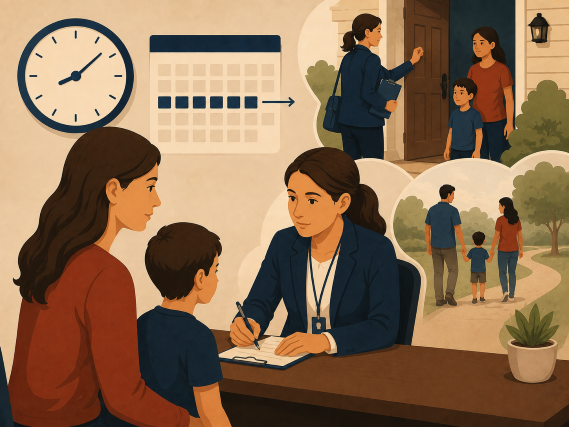

Quick Answer: CPS investigations in Texas typically take 30 to 45 days from the date the report is received, though cases involving medical exams, legal proceedings, or coordination with other agencies can extend beyond that.
CPS must attempt face-to-face contact with the child within 72 hours and must complete most investigations within 30 days, with a possible 15-day extension.
Child Protective Services (CPS) plays a critical role in investigating allegations of child abuse and neglect in Texas. While its mission is to protect vulnerable children, the CPS investigation process can be overwhelming, stressful, and invasive for parents or guardians.
Many families in Round Rock and throughout Texas suddenly find themselves under scrutiny, often without a full understanding of the timeline, procedures, or consequences involved. If you are under investigation, speaking with a qualified Round Rock CPS attorney from The Law Office of Brett H. Pritchard can be a vital first step toward navigating the challenges ahead.
Key Takeaways
CPS investigations typically last 30 to 45 days, with a required 72-hour face-to-face contact and a possible 15-day extension.
CPS must begin investigating within 24 hours of a high-priority report.
Investigations involve interviews, a home visit, and requests for cooperation, such as releases or evaluations.
Investigations conclude with one of four findings: Ruled Out, Unable to Determine, Reason to Believe, or Administrative Closure.
A "Reason to Believe" finding can lead to voluntary services, a safety plan, or a lawsuit (SAPCR), and can affect future cases.
CPS can only remove a child without a court order in emergency circumstances, and must obtain a court order within one business day of removal.
Parents have specific legal rights throughout the investigation, including the right to counsel and the right to refuse entry without a court order.
A closed case can be reopened if a new report is made, and prior findings can carry weight in future investigations.
What Triggers a CPS Investigation in Texas?
In Texas, CPS is a division of the Department of Family and Protective Services (DFPS) and is responsible for investigating reports of child abuse, neglect, or endangerment. These reports can be made by:
Teachers or school counselors
Medical professionals
Neighbors or relatives
Law enforcement officers
Anonymous individuals
Once CPS receives a report through the Texas Abuse Hotline or the online reporting system, the agency evaluates whether the information warrants further investigation. If it does, CPS is legally obligated to begin its investigation within 24 hours of receiving a high-priority report, such as one involving immediate danger.
If you have learned that a report has been made against you or your family, an experienced Round Rock CPS attorney can help you understand what triggered the investigation and how to respond before CPS makes initial contact.
How Long Do CPS Investigations Take in Texas?
CPS investigations in Texas typically last 30 to 45 days from the date the report is received. The exact length can vary depending on the complexity of the case, the availability of witnesses, and whether law enforcement is conducting a concurrent investigation.
Standard timeframe:
Initial contact: CPS must attempt to make face-to-face contact with the child within 72 hours of receiving the report.
Full investigation: Most investigations must be completed within 30 days, though the agency may request an extension of up to 15 additional days if needed.
Delays: In rare cases, especially those involving medical examinations, legal proceedings, or coordination with other agencies, investigations can extend beyond 45 days. Extensions must be documented and justified.
While the agency is required to adhere to these timelines, parents should not assume that delays mean the case is less serious. Even if the investigation takes longer than expected, the case may still result in legal action or a recommendation for removal.
What Happens During the CPS Investigation?
Once a CPS case is opened, the investigator begins gathering information to assess whether abuse or neglect has occurred and whether the child is in danger. The process can include the following.
Interviews
The investigator will usually interview the child, the parents or guardians, and any other adults living in the household. Interviews may also involve siblings, extended family members, teachers, doctors, and daycare providers.
CPS may speak to the child at school or another neutral location without informing the parent beforehand, especially if there is concern about the child's safety in the home.
Home Visit
CPS will typically conduct a home visit to observe the living conditions and assess whether the environment is safe and suitable for the child. During this visit, the investigator may look for signs of abuse, inadequate supervision, drug or alcohol use, poor hygiene, or other risks.
Parents should understand that CPS investigators are not law enforcement officers, though they do have the authority to take photographs, request drug testing, and refer the matter to police if they find evidence of criminal conduct.
Request for Cooperation
CPS may ask parents to sign releases for medical records, agree to psychological evaluations, or participate in parenting classes or drug rehabilitation programs. While these requests may seem voluntary, failure to comply can influence the agency's findings and recommendations.
Before agreeing to any course of action, it is advisable to consult with an experienced Round Rock CPS lawyer to understand your rights and whether compliance is genuinely in your best interest.
Collaboration with Law Enforcement
If the allegations involve physical or sexual abuse, CPS may coordinate its investigation with law enforcement. In such cases, the criminal investigation may take precedence, and CPS may delay closing its case until the criminal matter is concluded.
What Are the Possible Outcomes After a CPS Investigation?
Once the investigation concludes, CPS will issue one of four possible findings.
Ruled Out
The investigator found no evidence to support the allegation of abuse or neglect. The case is closed, with no further action required.
Unable to Determine
If there is insufficient evidence to confirm or deny the report, CPS may close the case with a finding of "Unable to Determine." This result can still affect your record and may be used in future investigations.
Reason to Believe
This is the most serious finding. If CPS concludes there is sufficient evidence that abuse or neglect occurred, it may take further steps, including recommending services, filing a petition in court, or removing the child from the home.
Administrative Closure
This occurs when the family cannot be located, the child moves out of the jurisdiction, or the report was made in error.
Even if a case is closed without removal or court intervention, a finding of "Reason to Believe" can remain on your CPS record and impact future employment, background checks, or licensing.
What Happens Next If CPS Finds "Reason to Believe"?
If CPS substantiates the allegations, several things may happen, depending on the level of risk to the child.
Voluntary Services
In some cases, CPS may offer Family Based Safety Services (FBSS), a program designed to help families reduce risk factors while allowing the child to remain in the home. Participation is technically voluntary, but refusal can lead to court intervention.
Safety Plan
CPS may implement a safety plan, requiring the parent to agree to specific conditions such as supervised visitation, removal of an abusive individual from the home, or participation in counseling. Failure to comply can result in the matter being escalated to court.
Filing a Lawsuit
If CPS believes the child is in immediate danger and the parents are not cooperative, the agency may file a Suit Affecting the Parent-Child Relationship (SAPCR). This lawsuit can lead to:
Temporary orders for removal
Court-mandated services
Restrictions on visitation or custody
If you receive notice of a hearing or court filing, you should immediately contact a Round Rock CPS attorney to prepare a defense and assert your parental rights.
Can CPS Take My Child Without a Court Order?
CPS can only remove a child without a court order under emergency circumstances, such as:
Immediate physical harm or threat of harm
Sexual abuse
Abandonment
Unsafe conditions that pose a substantial risk
In such cases, CPS must obtain a court order within one business day following the removal. A hearing will then be held within 14 days to determine whether the removal was justified and whether the child should remain in state custody.
What Are My Rights During a CPS Investigation?
Many parents are unaware of their legal rights throughout the CPS process. These rights include:
The right to be informed of the allegations
The right to refuse entry into your home unless CPS has a court order or exigent circumstances exist
The right to remain silent and avoid self-incrimination
The right to consult with legal counsel before signing any documents
The right to attend court hearings and present evidence
The right to appeal specific CPS findings
Exercising your rights respectfully and strategically can significantly impact the outcome of your case.
How Can a Round Rock CPS Lawyer Help?
An experienced Round Rock CPS attorney can provide critical support from the moment the investigation begins. Legal counsel is especially important when:
The allegations involve physical or sexual abuse, which can lead not only to removal but also to potential criminal charges
You have a prior CPS history that may be used against you as evidence of a pattern of behavior
Law enforcement is involved, as statements made to CPS can be shared with police and used in criminal proceedings
CPS has recommended removal or court intervention, which can result in temporary or permanent loss of custody
You are facing pressure to sign a safety plan, agree to certain conditions, or waive your rights without fully understanding the legal consequences
A Round Rock CPS attorney can:
Communicate with CPS on your behalf, reducing the risk of making statements that may be misconstrued or used against you later
Review the allegations and the evidence CPS has gathered, helping you build a fact-based response
Attend interviews and home visits with you, helping ensure you are not intimidated or misled during questioning
Advocate for your parental rights in court, presenting alternative solutions and defending against unwarranted removal
Challenge improper procedures or findings, including filing motions to suppress improperly obtained evidence or appealing biased determinations
Help you pursue the return of your child if removal has occurred, guiding you through reunification plans and compliance with court orders
The sooner an attorney becomes involved, the better your chances of preserving custody, preventing unnecessary escalation, and protecting your relationship with your child throughout this difficult process.
Can a CPS Case Be Reopened After It Has Been Closed?
Yes. If a new report is made, even one that appears minor, CPS may reopen a case or initiate a new investigation. A "Reason to Believe" finding from a previous case can weigh heavily against you in any future investigation, even if no criminal charges were filed.
This is why it is important to challenge inaccurate or unfounded CPS findings, even after a case has closed. Texas law allows you to request a review or appeal of specific findings within a limited time frame.
A knowledgeable Round Rock CPS attorney can assist with the review or appeal process to help protect your reputation and your future.
What Should I Avoid During a CPS Investigation?
While every case is unique, there are certain common missteps that parents should avoid:
Do not attempt to explain away serious allegations without legal advice, as statements made early can later be used against you in court
Do not allow investigators unfettered access to your home without understanding your rights, including the right to refuse entry without a warrant or exigent circumstances
Do not sign a safety plan or service agreement without reviewing it with an attorney, as these documents can be used to justify future action against you
Do not miss appointments or fail to comply with court-ordered services, which may be seen as a lack of commitment to your child's safety
Do not disparage CPS or others involved in the investigation online or in public, as this can damage your credibility
Your actions, demeanor, and willingness to cooperate, while maintaining your rights, can influence how the agency evaluates your family. Remaining calm, respectful, and proactive while working with experienced legal counsel is often an effective path toward resolving the case and protecting your family's future.
Protect Your Family by Taking Action Early
CPS investigations in Texas are complex, emotionally charged, and can last anywhere from a few weeks to several months, depending on the case's details and severity. Even if the allegations seem minor or unfounded, the outcome can profoundly affect your parental rights, your child's well-being, and your family's future.
If you are under investigation or have received notice of a CPS case in Round Rock, an experienced Round Rock CPS lawyer can provide the knowledge, strategy, and advocacy necessary to protect your rights and help you reach a resolution that keeps your family intact.
Frequently Asked Questions
How long does a CPS investigation take in Texas? CPS investigations typically last 30 to 45 days from the date the report is received, though the timeline can vary based on case complexity, witness availability, and any concurrent law enforcement investigation.
How quickly must CPS make contact after a report is filed? CPS must attempt face-to-face contact with the child within 72 hours of receiving the report, and it must begin investigating high-priority reports involving immediate danger within 24 hours.
What are the possible outcomes of a CPS investigation? CPS investigations conclude with one of four findings: Ruled Out, Unable to Determine, Reason to Believe, or Administrative Closure.
Can CPS remove my child without a court order? CPS can only remove a child without a court order in emergency circumstances, such as immediate physical harm, sexual abuse, abandonment, or unsafe conditions posing a substantial risk. CPS must then obtain a court order within one business day, and a hearing is held within 14 days.
What rights do parents have during a CPS investigation? Parents have the right to be informed of the allegations, to refuse entry without a court order or exigent circumstances, to remain silent, to consult with legal counsel before signing documents, to attend court hearings, and to appeal specific findings.
Can a closed CPS case be reopened? Yes. A new report, even a minor one, can prompt CPS to reopen a case or start a new investigation, and a prior "Reason to Believe" finding can weigh against a family in future investigations.
To speak with a skilled Round Rock CPS lawyer at The Law Office of Brett H. Pritchard, call 254-781-4222 or contact us online today. Early legal guidance can make a difference in how your CPS case is resolved.
Related Reading
5 Stages of the Child Protective Services (CPS) Investigation
8 Reasons Child Protective Services May Take Your Child from Home
What to Do If You Are Falsely Accused of Child Abuse in Texas