


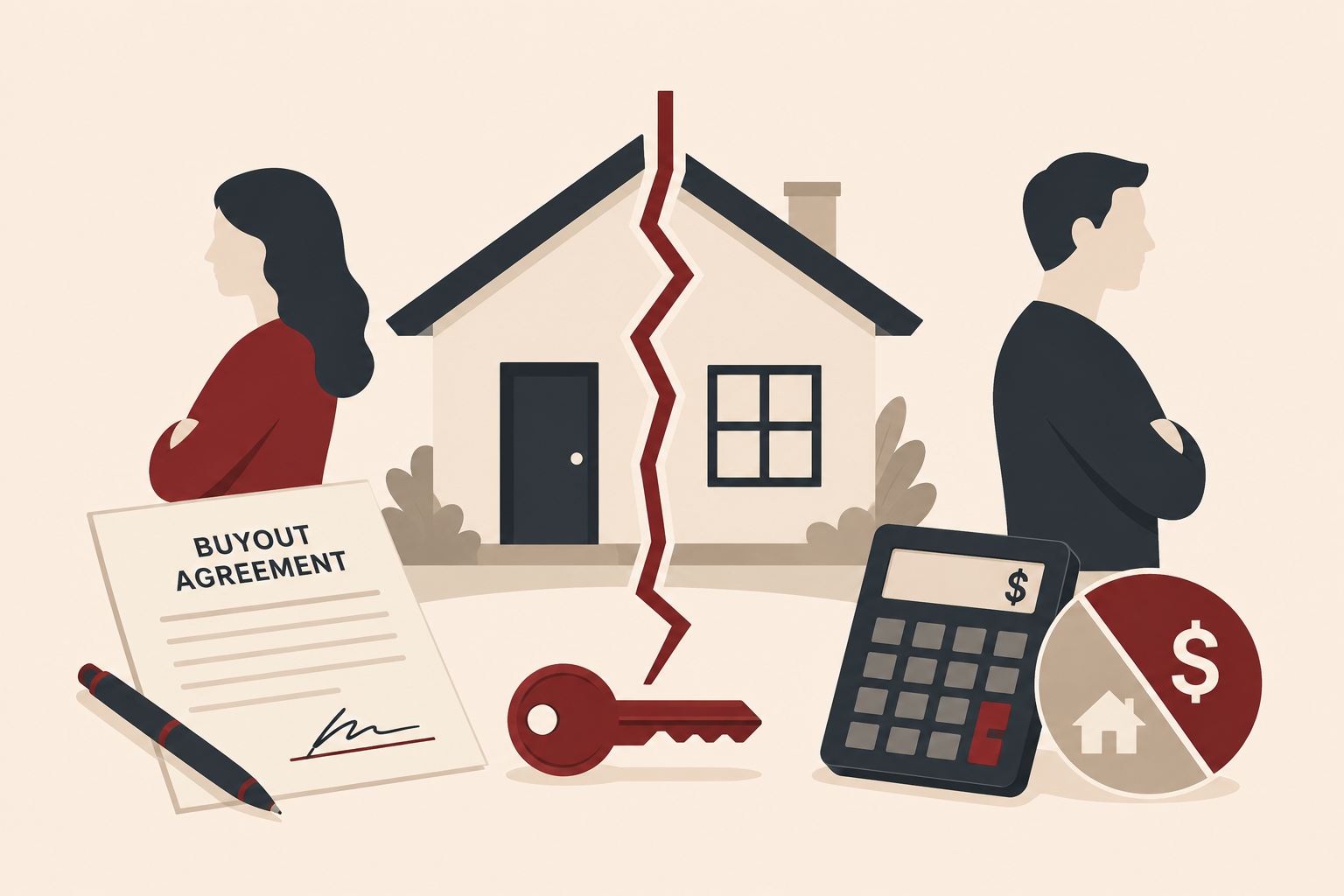

For most couples, the family home is the largest marital asset and one of the most emotionally charged issues in a divorce. When selling the home together is not the right answer, a buyout may be. Understanding how the home buyout process works can help you protect your financial rights and make informed decisions about your future.
The bottom line: A home buyout allows one spouse to purchase the other's ownership interest in the family home, keeping the property intact while compensating the departing spouse. The process involves appraisal, equity calculation, financing, and a formal transfer of ownership. Working with an experienced Killeen divorce attorney is essential to getting it right.
Key Takeaways
Texas is a community property state, meaning the family home is generally owned equally by both spouses if acquired during the marriage.
Marital property must be divided in a just and right manner, which typically means equally unless specific factors justify a different split.
A home buyout allows one spouse to keep the house by compensating the other for their ownership share.
The process involves getting the home appraised, calculating equity, determining the buyout amount, securing financing, and transferring ownership.
Buyouts can benefit families with children, simplify the divorce process, and protect emotional investments in the home.
Potential downsides include valuation disputes, financial strain, refinancing challenges, and missed future appreciation for the selling spouse.
A Killeen divorce attorney can help protect your financial rights throughout the property division process.
Property Division in a Texas Divorce
Texas is a community property state. Everything you and your spouse acquired during your marriage belongs equally to both of you, including your family home. Upon divorce, that community property must be divided in a just and right manner.
What "Just and Right" Means
Just and right means fairly in the context of your specific marriage and divorce, not necessarily a perfect 50/50 split. The following factors can shift the division:
A fault-based divorce, where the spouse who proves the other's wrongdoing may be entitled to a larger share
The dissipation of marital funds by one spouse leading up to the divorce, which can favor the other spouse
Unless there is a reason to rule otherwise, marital property is typically divided equally between both spouses.
Is Your Home Marital Property?
If you purchased your home during your marriage, it is almost certainly marital property. If you and your spouse purchased it together before marriage, the same is likely true. If one of you owned the home before the marriage, additional complications arise.
Separate Property and the Family Home
Property owned before marriage and kept strictly separate during the marriage belongs to the original owner as separate property. If either spouse owned the family home before the marriage, that spouse will likely retain ownership. However, the other spouse may still have a claim to part of the asset because:
Any increase in the property's value during the marriage is generally considered marital property.
Using marital funds to improve, maintain, or pay the mortgage on the home blurs the line between separate and marital property.
The spouse claiming the home as separate property must prove its separate nature, and the other spouse's degree of ownership must be established before a buyout can proceed.
Factors Texas Courts Consider in Property Division
Texas courts weigh a wide range of factors when dividing marital property:
The length of the marriage
Whether fault played a role in the dissolution
Each spouse's contributions to the marriage, including homemaking and childcare
Each spouse's separate assets
Each spouse's earning power and marketability
Each spouse's overall physical and mental health
Any significant age disparity between the spouses
Any additional factors the court considers relevant
What Is a Home Buyout in Divorce?
A home buyout occurs when one spouse purchases the other's ownership interest in the family home. The buying spouse keeps the property; the selling spouse receives compensation for their share of the marital asset. The goal is a fair division of a primary asset that allows both spouses to move forward independently after the divorce.
The Home Buyout Process: Step by Step
Step 1: Get the Home Appraised
Before either spouse can buy out the other, the home's fair market value must be established. A professional appraisal is the standard approach. Agreeing on an appraiser that both spouses trust is the best way to reach a value you can both accept.
Step 2: Calculate Your Equity
Home equity is the difference between the home's market value and the remaining mortgage balance. For example, if the home is valued at $500,000 and the remaining mortgage is $150,000, the couple's total equity is $350,000.
Step 3: Determine the Buyout Amount
With a standard 50/50 division, the buyout amount equals half of the total equity. Using the example above, the buying spouse would need to pay the selling spouse $175,000. Factors that support an unequal division may adjust this figure.
Step 4: Secure Financing
The buying spouse must have the financial means to complete the buyout. Options include:
Offsetting the seller's ownership share with other marital assets, so no direct payment is needed
Refinancing the existing mortgage into the buying spouse's name only
Obtaining a new loan to pay the selling spouse directly
The buying spouse must also demonstrate the ability to handle ongoing mortgage payments independently after the divorce.
Step 5: Transfer Ownership
The final step involves formally transferring the selling spouse's ownership to the buyer. This requires drafting and signing the appropriate legal documents, updating the title and deed, and ensuring the selling spouse is officially released from all mortgage obligations going forward.
When a Home Buyout Makes Sense
Providing Stability for Your Children
Divorce is hard on children. Remaining in the family home can provide meaningful continuity — the same school, community, and home environment — during a disruptive transition. If becoming the primary custodial parent is your goal, staying in the family home can support that stability significantly.
If keeping the children in the family home matters to both parents but a direct buyout is not financially feasible, alternatives may include:
Continuing to co-own the home until the children are grown and addressing ownership at that time
Purchasing the other spouse's ownership share gradually over time
Simplifying the Divorce Process
If one spouse has the financial means and the desire to keep the home, a buyout can streamline property division and reduce the complexity of the overall divorce. It also eliminates the costs, stress, and logistics associated with listing, showing, selling, and moving out of the home.
Addressing Emotional Attachment
For many families, the home carries deep emotional significance. Raising children there, anticipating future visits and grandchildren, and avoiding the upheaval of a move during an already difficult time are all valid reasons to pursue a buyout.
Protecting Against a Downturn in the Market
If the real estate market is unfavorable at the time of divorce, selling immediately may result in a lower price. Keeping the home through a buyout allows the owning spouse to wait for a stronger market.
Potential Downsides to a Home Buyout
A buyout is not always the right choice. Potential drawbacks include:
Disputes over the home's appraised value
Financial strain on the buying spouse
Refinancing challenges related to post-divorce income and credit
The risk that the selling spouse will miss out on significant future appreciation in the home's value
Work With a Killeen Divorce Attorney to Protect Your Financial Rights
Property division is one of the most consequential parts of any divorce. Brett Pritchard at the Law Office of Brett H. Pritchard in Killeen, Texas has a strong track record of guiding clients through complex property division issues toward outcomes that protect their financial futures.
Call (254) 781-4222 or contact us online to schedule a FREE consultation today.
Frequently Asked Questions
Is the family home always considered marital property in a Texas divorce?
If the home was purchased during the marriage, it is almost certainly marital property. If one spouse owned it before the marriage, it may be separate property, but factors like mortgage payments made with marital funds or appreciation in value during the marriage can give the other spouse a partial ownership claim.
How is a home buyout amount calculated in a Texas divorce?
The buyout amount is based on the home's equity, which is the difference between its appraised market value and the remaining mortgage balance. With a standard 50/50 division, the buying spouse pays the selling spouse half of the total equity. Factors that support an unequal division can adjust this figure.
What financing options are available for a home buyout in divorce?
Options include offsetting the seller's share with other marital assets, refinancing the mortgage into the buying spouse's name, or obtaining a new loan to pay the selling spouse directly. The buying spouse must also be able to handle ongoing mortgage payments independently.
What are the benefits of a home buyout during divorce?
A buyout can provide stability for children during divorce by keeping them in the same home, school, and community. It can also simplify property division, avoid the costs and stress of selling, address emotional attachment to the home, and protect against an unfavorable real estate market at the time of divorce.
What are the risks of a home buyout in a Texas divorce?
Potential downsides include disputes over the home's appraised value, financial strain on the buying spouse, challenges refinancing on a single post-divorce income, and the possibility that the selling spouse misses out on future appreciation in the home's value.
How does Texas community property law affect home division in divorce?
Texas treats all assets acquired during the marriage as community property owned equally by both spouses. Upon divorce, community property must be divided in a just and right manner. While this typically means a 50/50 split, factors such as fault, contributions to the marriage, and each spouse's financial situation can support a different division.
How do I get legal help with property division in a Killeen, TX divorce?
Contact the Law Office of Brett H. Pritchard to schedule a FREE consultation. Brett Pritchard is a dedicated Killeen divorce attorney ready to protect your financial rights throughout the property division process. Call (254) 781-4222 or contact us online today.